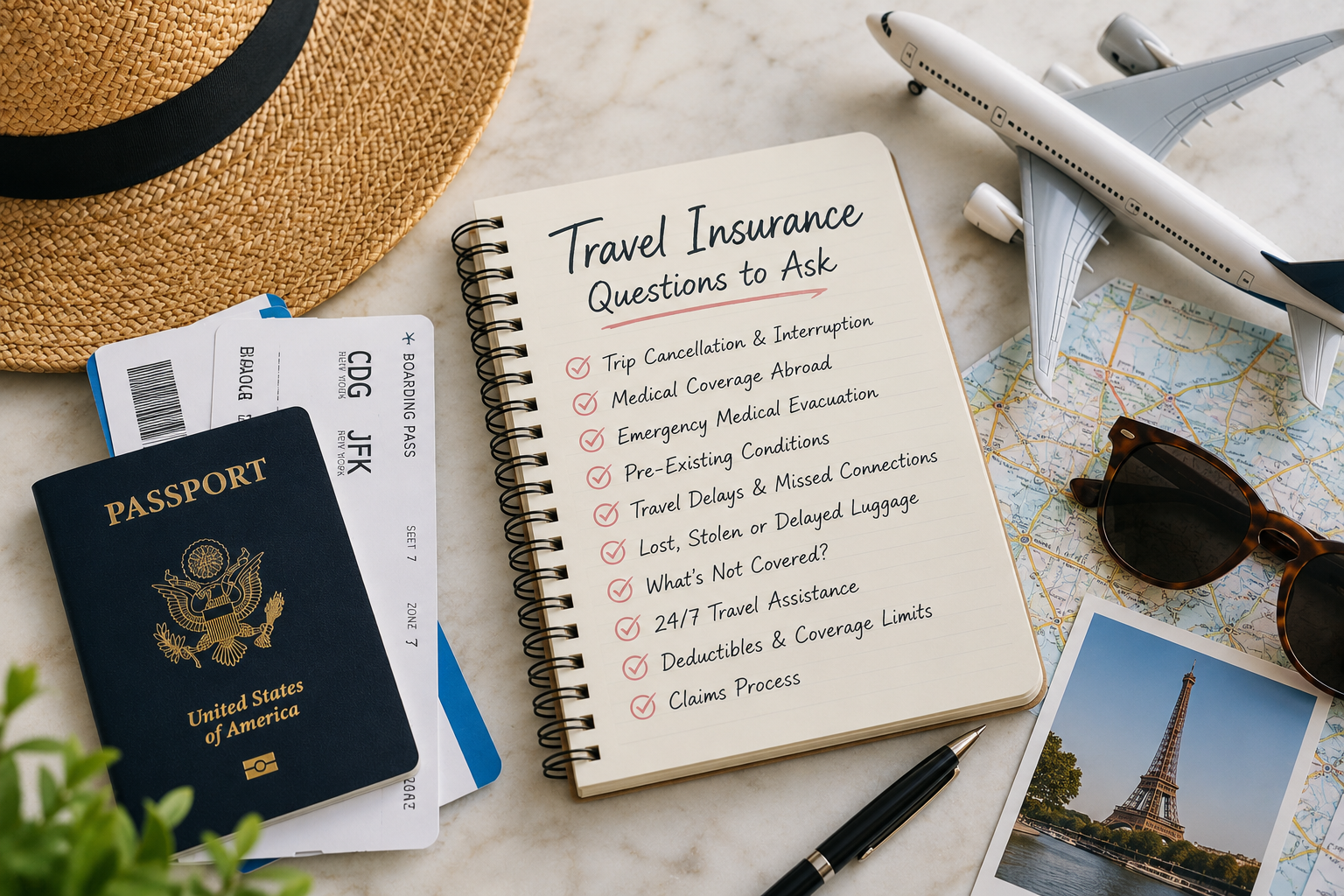
Travel insurance is one of those things you hope you never need — but when something goes wrong, having the right policy can make a huge difference.
One of the biggest mistakes travelers make is assuming all travel insurance is basically the same.
It isn’t.
A cheaper policy isn’t necessarily a better deal, and simply seeing words like “trip cancellation” or “medical coverage” on a policy doesn’t tell you when that coverage actually applies.
Before you purchase travel insurance for your next trip, here are 13 questions you should ask.
1. What reasons qualify for trip cancellation?
Trip cancellation insurance generally doesn’t mean you can cancel your trip for whatever reason you want and receive your money back.
Standard policies typically cover a specific list of circumstances, known as covered reasons. These may include things like certain illnesses or injuries, severe weather, or other qualifying events, depending on the policy.
Before buying, look at the actual covered reasons rather than assuming your particular situation will qualify.
2. Does the policy offer Cancel For Any Reason (CFAR)?
If you want more flexibility, look into Cancel For Any Reason coverage, commonly called CFAR.
CFAR may allow you to cancel for reasons that aren’t included under a policy’s standard trip cancellation coverage.
But there’s an important catch: CFAR generally doesn’t reimburse 100% of your trip cost, and there are usually specific requirements surrounding when you purchase the coverage, how much of your trip you insure, and how far in advance of departure you cancel.
Always check the specific terms of the policy you’re considering.
3. How soon after booking do I need to buy travel insurance?
This is a big one because when you purchase your policy can matter.
Certain benefits or waivers may only be available when insurance is purchased within a specified period after your initial trip payment or deposit.
Waiting until right before departure could mean you no longer qualify for certain optional benefits or waivers.
You don’t necessarily need to purchase insurance the second you book a trip, but you should find out what deadlines apply to the specific policy you’re considering.
4. Does it cover pre-existing medical conditions?
If you, a traveling companion, or potentially another person whose health could affect your trip has a pre-existing medical condition, pay particular attention to how the policy defines and handles pre-existing conditions.
Some travel insurance policies offer a pre-existing medical condition exclusion waiver when certain requirements are met. Those requirements may include purchasing coverage within a specific timeframe after your initial trip payment.
Definitions, look-back periods, eligibility requirements and covered individuals vary by policy, so this is an area where reading the details really matters.
5. How much emergency medical coverage does it provide abroad?
Don’t automatically assume your regular health insurance will cover you when you leave the United States.
International coverage varies significantly by health plan. Original Medicare generally does not cover medical care outside the United States except in limited circumstances. Some Medicare Advantage plans and Medigap policies may provide additional foreign travel coverage, so travelers should check their individual plan.
Look at how much emergency medical coverage your travel insurance provides and what types of treatment qualify.
Also check whether the travel medical coverage is primary or secondary. Depending on the policy and your other insurance, you may be required to submit eligible expenses to another insurer first.
6. Does it include emergency medical evacuation?
Getting sick or injured somewhere without appropriate medical facilities can become extremely expensive if you need to be transported elsewhere for treatment.
Emergency medical evacuation coverage may help with eligible transportation expenses when a qualifying medical emergency requires evacuation.
Don’t just check whether evacuation is included. Look at the coverage limit and the circumstances under which the benefit applies.
7. How much trip cancellation and interruption coverage is included?
These sound similar, but they’re designed for different situations.
Trip cancellation generally applies when a covered event prevents you from taking your trip.
Trip interruption generally applies when a covered event occurs after your trip has begun and causes you to interrupt or cut the trip short.
Check the maximum benefits available and which of your prepaid, nonrefundable expenses are eligible to be insured. Also check whether the policy requires you to insure all eligible trip costs to qualify for certain benefits or waivers.
8. What isn’t covered?
This may be one of the most important questions on this list.
Every travel insurance policy has exclusions.
For example, simply changing your mind about traveling or being afraid to travel may not be covered under standard trip cancellation benefits. Policies can also contain exclusions related to certain activities, destinations, events, medical circumstances, or other situations.
Don’t just read the list of benefits.
Read the exclusions, too.
9. What happens if my flight is significantly delayed?
Travel delay coverage may reimburse certain additional expenses when you’re delayed for a covered reason.
Depending on the policy, eligible expenses might include things like meals, accommodations, or local transportation.
But policies generally have requirements before this coverage kicks in — which may include a minimum delay period, a covered reason for the delay, and daily or total reimbursement limits.
Check those details before assuming every flight delay will qualify.
10. What if I miss a connection?
A missed connection can have a domino effect on your trip, especially when you’re trying to catch a cruise, tour, train or other scheduled departure.
Some policies include missed-connection benefits that may reimburse certain additional transportation expenses or unused prepaid trip costs when you miss a connection for a covered reason.
The qualifying circumstances, required delay and coverage limits vary by policy.
If your trip involves a cruise, tour or complicated flight itinerary, this is particularly important to check.
11. What happens if my luggage is lost, stolen or delayed?
Travel insurance may include separate benefits for baggage loss and baggage delay.
Baggage-delay coverage may reimburse you for eligible essential purchases if your luggage doesn’t arrive when you do.
Baggage-loss coverage may provide reimbursement if covered belongings are lost, damaged or stolen, subject to the policy’s limits and exclusions.
Pay attention to maximum benefits, per-item limits, excluded items and how long baggage must be delayed before coverage begins.
12. What is the claims process?
Having great coverage isn’t particularly helpful if you don’t understand what you’ll need when it’s time to use it.
Find out how claims are submitted and what documentation you’ll need.
If something happens during your trip, save your receipts and documentation. Depending on the claim, you may need things like airline documentation, medical records, receipts, proof of payment or reports showing what happened.
13. Is 24/7 travel assistance included?
Many comprehensive travel insurance policies include access to an assistance service while you’re traveling.
This can be especially valuable during an international trip when you’re dealing with an emergency in an unfamiliar destination.
Check what assistance services are included and save the appropriate contact information somewhere you can easily access it while traveling.
So, Is Travel Insurance Worth It?
For many trips — particularly expensive international vacations, cruises, honeymoons and trips with significant prepaid, nonrefundable expenses — travel insurance is something I strongly recommend considering.
But the goal isn’t simply to have travel insurance.
The goal is to have a policy that makes sense for your trip, your investment and your priorities.
Before purchasing, compare more than the price. Look at:
- Covered reasons for cancellation and interruption
- Emergency medical coverage
- Medical evacuation coverage
- Pre-existing medical condition provisions
- CFAR availability and requirements
- Travel-delay and missed-connection benefits
- Baggage benefits
- Coverage limits, deductibles and exclusions
And remember: the best time to understand your travel insurance policy is before you need to use it.
Planning an International Trip?
As a travel advisor, I help my clients with more than choosing a hotel. I help coordinate the moving pieces of a trip — from flights and accommodations to transportation, tours and all those little details travelers don’t always know they need to think about.
If you’d rather have someone take the stress out of planning your next vacation, I’d love to help you plan it.
This information is provided for general educational purposes and is not insurance, legal or financial advice. Travel insurance benefits, eligibility requirements, definitions, exclusions and coverage limits vary by policy, provider and state. Always review the applicable policy documents carefully before purchasing coverage.
