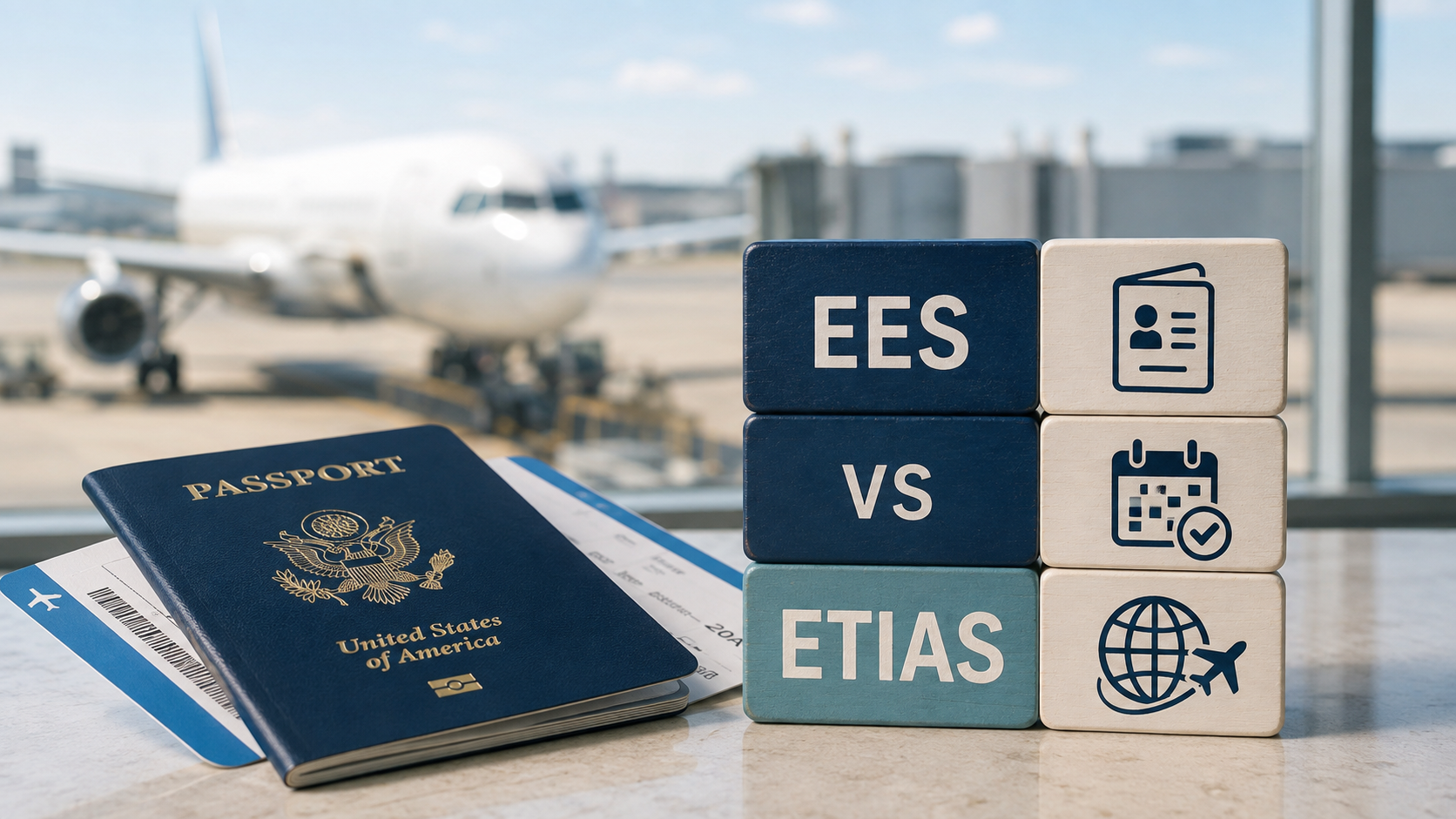
Europe’s New Travel Rules Explained
If you’re planning a trip to Europe, you’ve probably heard two acronyms popping up everywhere lately: EES and ETIAS. And if you’re confused about the difference, you’re definitely not alone. Both are part of Europe’s changing border and travel authorization system, both affect travelers from outside the European Union, including Americans, but they are two completely different things.
The easiest way to remember the difference is this: EES happens at the border. ETIAS happens before you travel. EES is already operational, while ETIAS is now expected to launch sometime in 2027, although an exact date has not yet been announced.
Here’s what travelers need to know about both.
What Is EES?
EES stands for the Entry/Exit System. It’s Europe’s new electronic border system for registering non-EU nationals traveling for a short stay. The system began rolling out in October 2025 and became fully operational on April 10, 2026.
EES applies when travelers cross the external borders of European countries participating in the system. For most vacationers, this means entering or leaving the Schengen Area.
What Is the Schengen Area?
The Schengen Area is a group of 29 European countries that have eliminated routine border checks between one another, essentially creating one large travel zone. Once you enter the Schengen Area and clear immigration, you can generally travel between Schengen countries without going through immigration again at each border.

It’s important to know that the Schengen Area and the European Union are not the same thing. Some countries, including Switzerland, Norway, Iceland and Liechtenstein, are part of Schengen but aren’t members of the EU. Ireland, on the other hand, is an EU member but isn’t part of the Schengen Area.
For American travelers, think of your first Schengen country as your entry point. If you fly from the United States to Paris and then connect to Rome, you’ll normally clear immigration in Paris because France is where you’re entering the Schengen Area. You generally won’t go through immigration again when continuing from France to Italy.
Instead of relying primarily on physical passport stamps, EES creates an electronic record when applicable travelers enter and leave. The system can collect and record:
- Passport information
- A facial image
- Fingerprints
- The date and location of entry
- The date and location of exit
- Records of refused entry, when applicable
This allows European border authorities to electronically track entries and exits and identify travelers who have exceeded their permitted length of stay.
Do Americans Need to Apply for EES?
No. This is one of the biggest misconceptions about the new system.
There is no EES travel authorization to purchase and no traditional application you need to complete before leaving home. EES is part of the border-crossing process itself. Your information is collected when you cross an external border where the system applies.
So if you hear someone say you need to “get your EES” before your European vacation, they’re most likely confusing EES with ETIAS.
Why Has EES Caused Longer Immigration Lines?
EES has gotten a lot of attention because the new procedures have contributed to longer processing times at some European border crossings. Registering and verifying biometric information can add steps to the immigration process, particularly while airports, border officials and travelers adjust to the system.
During the rollout, some airports experienced significant delays. Reports cited by the European Parliament described increased processing times at some airports and waits reaching several hours in certain instances. That does not mean you should expect a three-hour immigration line every time you arrive in Europe. Wait times can vary dramatically depending on the airport, time of day, passenger volume, staffing, technology and how many arriving passengers need to complete registration.
For travelers, the practical takeaway is simple: build some breathing room into your arrival plans. Be cautious about booking an extremely tight connection after your first entry into the Schengen Area or scheduling a nonrefundable tour immediately after your flight is supposed to land.
What Is ETIAS?
ETIAS stands for the European Travel Information and Authorisation System, and this is where many travelers get confused because ETIAS and EES are frequently discussed together.
Unlike EES, ETIAS is a pre-travel authorization. Once the program becomes operational, eligible travelers from visa-exempt countries, including the United States, will need to obtain an ETIAS authorization before traveling to participating European countries.
ETIAS is not a visa. Americans will continue to be visa-exempt for qualifying short stays, but ETIAS will add an additional authorization requirement before travel.
An easy way to think about the two systems is:
- EES = what happens when you cross the border
- ETIAS = what you do before traveling to the border
When Will ETIAS Launch?
ETIAS is not currently operational, and travelers do not need an ETIAS authorization for European trips right now.
ETIAS had most recently been expected to launch in the last quarter of 2026, but that timeline has changed. The European Union has removed that specific launch window from its current guidance and says that the official start date will be announced several months before ETIAS becomes operational.
The system is now expected to launch sometime in 2027, although an exact date has not been announced.
The ETIAS timeline has changed multiple times, so travelers should be cautious about information they see online, especially third-party websites claiming that you can already apply. For now, the most important thing to know is that there is nothing you need to apply for yet.
How Will ETIAS Work?
Once ETIAS becomes operational, eligible travelers will complete an online application before traveling. The application will request basic personal and passport information along with other travel and security-related information.
Travelers should expect to provide information such as:
- Personal information
- Passport details
- Contact information
- Travel-related information
- Certain security and background information
Most applications are expected to be processed quickly, although some travelers may require additional review. Once approved, the authorization will be electronically linked to the passport used for the application.
How Much Will ETIAS Cost?
The current official ETIAS application fee is €20. Travelers under age 18 and over age 70 will be exempt from paying the application fee, although they may still need to obtain an ETIAS authorization once the system becomes operational. Certain family members of EU citizens may also qualify for an exemption from the fee.
Once approved, an ETIAS authorization will generally be valid for three years or until the passport associated with it expires, whichever comes first. Because the authorization is linked to your passport, getting a new passport means you’ll need a new ETIAS authorization as well.
It’s also important to understand that an approved ETIAS does not automatically guarantee entry into Europe. Border authorities will still make the final determination when you arrive.
Will Americans Eventually Need Both EES and ETIAS?
For a typical American tourist taking a short European vacation, the answer will generally be yes, but you don’t choose one or the other because they serve completely different purposes.
Once ETIAS becomes operational, eligible American travelers will obtain their ETIAS authorization before traveling. Then, when they cross an applicable external European border, EES will be part of the border-control process.
In other words, ETIAS gets dealt with before your trip. EES gets dealt with when you arrive.
Be Careful of ETIAS Scams
Because ETIAS has received so much publicity, and because its launch has been delayed multiple times, unofficial websites have appeared offering ETIAS information and application services.
This is especially important right now because ETIAS applications are not currently open. Be wary of websites telling you that you need to pay for an ETIAS authorization for a trip happening now.
When applications officially open, travelers should use the official European Union ETIAS website or official ETIAS app rather than clicking on a random sponsored search result or third-party website.
What Should You Do Before Your Next Trip to Europe?
If you’re traveling to Europe soon, you don’t need to panic about all these new acronyms. EES is the system you need to be aware of right now, and it doesn’t require an application before your trip.
Be prepared for the possibility that immigration may take longer than you’ve experienced on previous trips, especially when entering through a busy airport. Give yourself plenty of time for onward connections and avoid making arrival-day plans that depend on getting through immigration quickly.
As for ETIAS, there is nothing you need to apply for right now. It’s currently expected sometime in 2027, but because the implementation timeline has changed several times, travelers should wait for the European Union to announce the official launch date before taking any action.
Planning a Trip to Europe?
European travel is changing, and entry requirements are only one piece of the puzzle. From choosing the right airports and connections to transportation, hotels, activities and building an itinerary that actually makes sense geographically, the details can make a huge difference in how smoothly your trip goes.
I help my clients navigate those details so they can spend less time researching and more time looking forward to their trip.
Ready to start planning your European getaway? Get in touch and let’s start planning.
